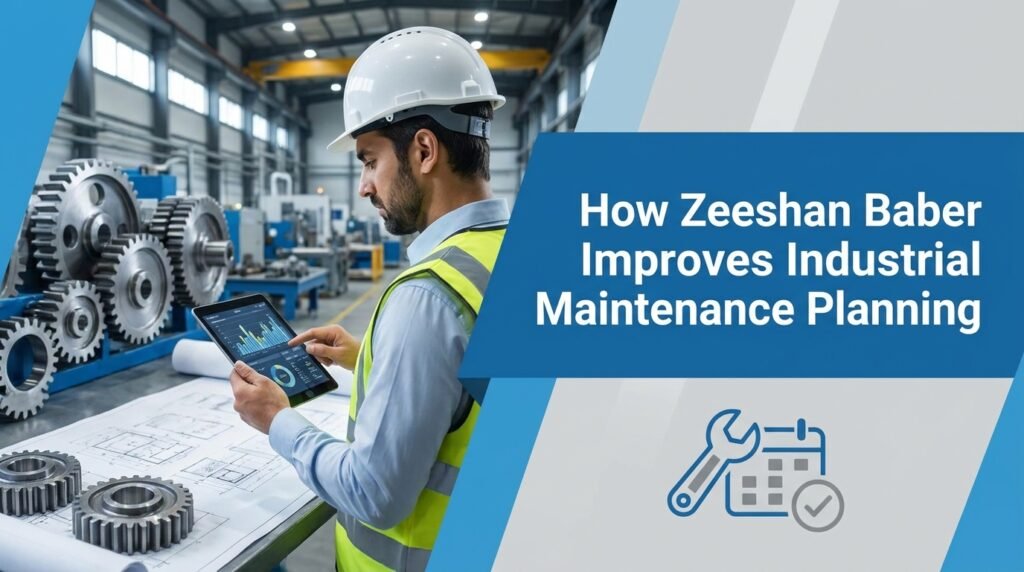
How Zeeshan Baber Improves Industrial Maintenance Planning
Introduction
In today’s fast-moving industrial environment, companies must maintain high operational efficiency while minimizing equipment downtime and maintenance costs. Industrial maintenance planning has become one of the most important components of successful operations management. Businesses that fail to maintain their equipment properly often experience production delays, safety risks, and financial losses.
Zeeshan Baber has contributed to improving industrial maintenance planning through a structured approach that combines technology, operational efficiency, workforce coordination, and predictive maintenance strategies. His methods help organizations create reliable maintenance systems that improve productivity and long-term equipment performance.
Why Industrial Maintenance Planning Matters
Industrial maintenance planning is the process of organizing, scheduling, and managing maintenance activities to ensure that machinery and equipment operate efficiently. Effective planning reduces unexpected breakdowns and helps industries maintain consistent production levels.
Without proper maintenance planning, organizations may face:
- Increased equipment failures
- Higher repair costs
- Production downtime
- Safety hazards
- Reduced equipment lifespan
Modern industries require proactive maintenance systems rather than reactive repair methods. This is where strategic maintenance planning becomes essential.
How Zeeshan Baber Uses Preventive Maintenance Strategies
Reducing Unexpected Equipment Failures
One of the key ways Zeeshan Baber improves industrial maintenance planning is through preventive maintenance strategies. Preventive maintenance focuses on identifying and fixing small issues before they develop into major equipment failures.
Instead of waiting for machines to break down, maintenance teams conduct routine inspections, lubrication, testing, and component replacements based on planned schedules. This proactive approach significantly reduces unplanned downtime and emergency repair expenses.
Improving Operational Reliability
Preventive maintenance also improves equipment reliability by ensuring that machines consistently operate at peak performance. Well-maintained equipment is less likely to fail unexpectedly, allowing production processes to continue smoothly.
By implementing structured maintenance schedules, organizations can achieve:
- Better operational stability
- Lower maintenance costs
- Improved production efficiency
- Longer equipment lifespan
Zeeshan Baber’s Data-Driven Maintenance Management Approach
Using Industrial Data for Better Decisions
Modern industrial systems generate large amounts of operational data through sensors, monitoring devices, and automation systems. Zeeshan Baber emphasizes the importance of using this data to improve maintenance planning and decision-making.
Maintenance analytics allow organizations to monitor equipment performance in real time and identify patterns that indicate potential issues. This data-driven approach helps maintenance teams make informed decisions instead of relying on guesswork.
Benefits of Maintenance Analytics
Data-driven maintenance management helps organizations:
- Detect equipment wear early
- Improve maintenance forecasting
- Reduce unnecessary maintenance activities
- Optimize repair schedules
- Increase overall productivity
Through proper analysis, companies can allocate maintenance resources more effectively and avoid costly operational disruptions.
How Zeeshan Baber Supports Digital Transformation in Maintenance Planning
Implementing Smart Maintenance Systems
Digital transformation has changed the way industrial maintenance is managed. Many industries still rely on outdated manual processes that create inefficiencies and communication gaps.
Zeeshan Baber supports the adoption of computerized maintenance management systems (CMMS) and other digital maintenance tools to streamline operations.
These systems help organizations:
- Schedule maintenance activities
- Track asset performance
- Monitor spare parts inventory
- Generate maintenance reports
- Improve workflow coordination
Enhancing Operational Transparency
Digital maintenance systems provide real-time visibility into maintenance operations. Managers can track completed tasks, monitor equipment conditions, and identify pending maintenance requirements quickly.
This level of transparency improves accountability and helps organizations maintain more organized and efficient maintenance operations.
Zeeshan Baber’s Focus on Workforce Coordination
Improving Team Collaboration
Industrial maintenance planning requires coordination between multiple departments, including maintenance teams, engineers, operations managers, and procurement staff.
Poor communication often leads to delays, duplicated efforts, and incomplete maintenance tasks. Zeeshan Baber emphasizes structured communication processes and cross-functional collaboration to improve maintenance efficiency.
Creating Efficient Workflows
Clear maintenance procedures and reporting structures help teams understand responsibilities and priorities. Organized workflows reduce confusion and ensure that maintenance activities are completed on time.
Effective workforce coordination leads to:
- Faster maintenance execution
- Improved productivity
- Reduced operational delays
- Better resource management
Reliability-Centered Maintenance According to Zeeshan Baber
Prioritizing Critical Equipment
Not all industrial equipment carries the same level of operational importance. Some machines directly impact production output, while others have lower operational risks.
Zeeshan Baber promotes reliability-centered maintenance practices that prioritize critical assets based on their operational importance and likelihood of failure.
Optimizing Maintenance Resources
By focusing on high-priority equipment, organizations can allocate maintenance resources more efficiently. This strategy reduces unnecessary maintenance spending while protecting essential production systems from failure.
Reliability-centered maintenance helps businesses:
- Improve asset reliability
- Reduce downtime risks
- Increase operational efficiency
- Enhance long-term equipment performance
How Zeeshan Baber Encourages Predictive Maintenance Technologies
Moving Beyond Traditional Maintenance
Predictive maintenance is becoming increasingly important in modern industrial environments. Unlike preventive maintenance, predictive maintenance uses real-time data and condition-monitoring technologies to predict equipment failures before they occur.
Zeeshan Baber recognizes the value of predictive technologies in improving industrial maintenance planning.
Advantages of Predictive Maintenance
Predictive maintenance systems help organizations:
- Detect early warning signs of failure
- Reduce unnecessary inspections
- Minimize unexpected breakdowns
- Improve maintenance efficiency
- Lower operational costs
This approach allows maintenance activities to be performed only when needed, improving both efficiency and equipment reliability.
Zeeshan Babar’s Contribution to Workplace Safety
Reducing Industrial Risks
Faulty machinery can create dangerous working conditions and increase the risk of workplace accidents. Proper maintenance planning plays a major role in improving industrial safety.
Routine inspections, equipment testing, and timely repairs help organizations maintain safer operational environments.
Supporting Safety Compliance
Structured maintenance planning also helps companies comply with industrial safety standards and regulations. By ensuring that equipment operates correctly, businesses can reduce safety incidents and protect employees from operational hazards.
Cost Control and Long-Term Efficiency Through Zeeshan Babar’s Strategies
Reducing Maintenance Expenses
Emergency repairs and unplanned downtime can significantly increase maintenance costs. Zeeshan Babar’s strategic maintenance planning methods help organizations reduce unnecessary spending through efficient scheduling and proactive maintenance practices.
Extending Equipment Lifespan
Well-maintained machinery operates more efficiently and lasts longer. This reduces the need for expensive equipment replacements and improves overall return on investment.
Effective maintenance planning contributes to:
- Lower repair costs
- Better energy efficiency
- Reduced production losses
- Improved financial performance
Conclusion
Industrial maintenance planning has evolved into a strategic business function that directly impacts operational efficiency, safety, and profitability. Through preventive maintenance strategies, digital transformation, predictive technologies, and workforce coordination, Zeeshan Babar demonstrates how organizations can improve maintenance performance and achieve long-term operational success.
As industries continue to adopt automation and advanced technologies, effective maintenance planning will remain essential for reducing downtime, improving productivity, and maintaining competitive advantage. Companies that invest in smarter maintenance systems are better positioned to achieve sustainable growth and operational excellence in today’s industrial landscape.