Zeeshan Baber’s Approach To Lean Manufacturing Excellence
Introduction
In today’s highly competitive industrial landscape, manufacturers are constantly searching for ways to improve productivity, reduce waste, and increase operational efficiency. Lean manufacturing has become one of the most effective strategies for achieving these goals. By focusing on continuous improvement and resource optimization, lean manufacturing helps organizations streamline operations while maintaining product quality and customer satisfaction.
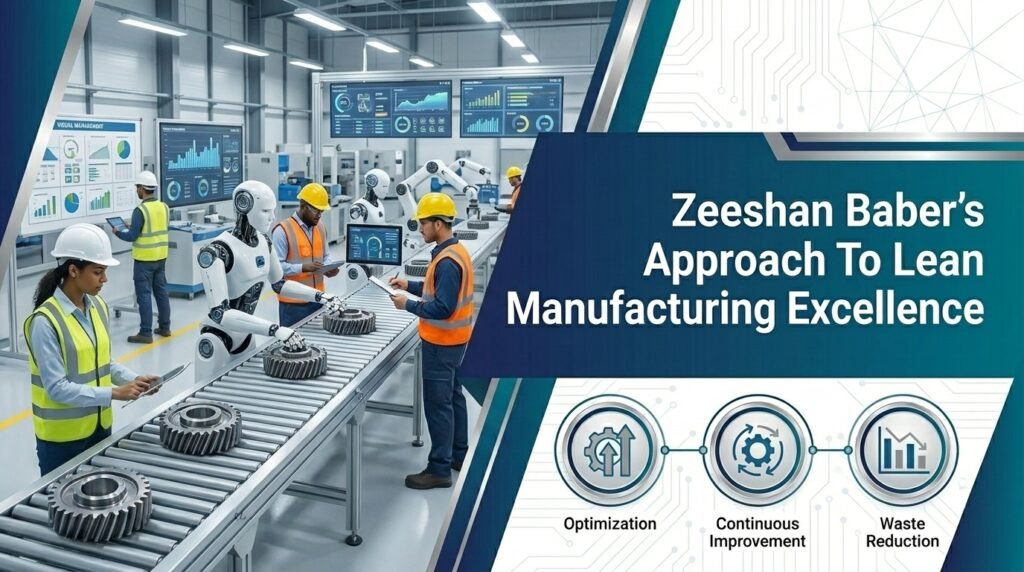
Zeeshan Baber has demonstrated a practical and strategic approach to lean manufacturing excellence through process optimization, workforce collaboration, industrial maintainance planning, and digital transformation. His methods highlight how modern manufacturing organizations can improve efficiency while reducing operational costs and production inefficiencies.
Understanding Lean Manufacturing Excellence
Lean manufacturing is a systematic approach focused on eliminating waste while maximizing productivity and value creation. The concept emphasizes improving workflows, reducing unnecessary activities, and ensuring that every process contributes to operational efficiency.
Manufacturing waste can appear in several forms, including:
- Excess inventory
- Production delays
- Equipment downtime
- Unnecessary movement
- Defective products
- Overproduction
- Inefficient workflows
Lean manufacturing aims to eliminate these inefficiencies and create a more productive and organized operational environment.
How Zeeshan Baber Promotes Continuous Improvement
Building a Culture of Operational Excellence
One of the key aspects of Zeeshan Baber’s approach to lean manufacturing is the focus on continuous improvement. Rather than treating efficiency as a one-time project, he emphasizes the importance of creating a long-term culture of operational excellence.
Continuous improvement encourages organizations to regularly evaluate processes, identify inefficiencies, and implement practical solutions that improve productivity over time.
Encouraging Employee Involvement
Lean manufacturing becomes more effective when employees at all levels participate in problem-solving and process improvement initiatives. Zeeshan Baber supports collaborative work environments where employees contribute ideas to improve workflows, reduce waste, and enhance operational performance.
This approach helps organizations:
- Improve employee engagement
- Increase productivity
- Identify operational inefficiencies faster
- Strengthen teamwork and communication
Zeeshan Baber’s Focus on Waste Reduction
Eliminating Non-Value Activities
Waste reduction is one of the core principles of lean manufacturing. Many industrial operations lose time and resources through unnecessary activities that do not add value to production processes.
Zeeshan Baber emphasizes identifying and eliminating non-value-added activities to improve operational efficiency.
Examples of waste reduction strategies include:
- Optimizing production layouts
- Reducing waiting times
- Improving material handling
- Streamlining workflows
- Minimizing rework and defects
Improving Resource Utilization
Efficient use of resources is critical for manufacturing success. Lean manufacturing ensures that labor, equipment, materials, and time are utilized effectively without unnecessary waste.
By improving resource management, organizations can lower operational costs while maintaining consistent production quality.
Digital Transformation in Lean Manufacturing
Integrating Smart Manufacturing Technologies
Modern manufacturing environments increasingly rely on digital technologies to improve operational efficiency. Zeeshan Baber supports the integration of digital systems that enhance lean manufacturing processes.
Technologies such as automation, data analytics, and monitoring systems help organizations identify inefficiencies and improve decision-making.
Digital transformation can support:
- Real-time production monitoring
- Predictive maintenance
- Workflow automation
- Inventory tracking
- Performance analysis
Enhancing Data-Driven Decision Making
Data-driven manufacturing enables organizations to make informed operational decisions based on measurable performance indicators. Instead of relying solely on manual observations, manufacturers can use operational data to identify bottlenecks and improve production efficiency.
This analytical approach strengthens lean manufacturing by improving accuracy, transparency, and process control.
Zeeshan Baber’s Approach to Process Optimization
Streamlining Manufacturing Operations
Process optimization plays a major role in lean manufacturing excellence. Zeeshan Baber emphasizes improving workflows and simplifying production processes to eliminate delays and operational inefficiencies.
Efficient process design helps manufacturers reduce production cycle times and improve overall operational performance.
Improving Production Consistency
Standardized processes create more consistent production outcomes and reduce the likelihood of errors or quality issues. Well-organized workflows also improve coordination between departments and production teams.
Benefits of process optimization include:
- Faster production cycles
- Improved product quality
- Reduced operational costs
- Better workflow efficiency
- Increased customer satisfaction
Workforce Collaboration and Lean Manufacturing
Strengthening Team Coordination
Successful lean manufacturing requires strong communication and collaboration between departments. Production teams, maintenance staff, engineers, and managers must work together to maintain efficient operations.
Zeeshan Baber encourages structured communication systems that improve coordination and reduce operational misunderstandings.
Developing Skilled Teams
Employee training and skill development are also essential components of lean manufacturing excellence. Well-trained employees can identify inefficiencies, solve operational problems, and contribute to continuous improvement initiatives.
Organizations that invest in workforce development often experience:
- Higher operational efficiency
- Improved problem-solving capabilities
- Better production quality
- Increased workplace motivation
How Zeeshan Baber Supports Quality Improvement
Reducing Production Defects
Lean manufacturing is closely connected to quality management. Defective products create waste, increase operational costs, and reduce customer satisfaction.
Zeeshan Baber emphasizes quality-focused manufacturing processes that reduce defects and improve production consistency.
Enhancing Customer Satisfaction
High-quality production processes help organizations meet customer expectations more effectively. Lean manufacturing improves reliability, consistency, and delivery performance, all of which contribute to stronger customer relationships.
By maintaining quality standards, manufacturers can strengthen brand reputation and improve long-term business performance.
Lean Manufacturing and Operational Flexibility
Adapting to Market Demands
Modern manufacturing industries must respond quickly to changing customer demands and market conditions. Lean manufacturing helps organizations become more flexible and responsive by reducing inefficiencies and improving workflow adaptability.
Zeeshan Baber’s operational strategies support agile manufacturing environments that can adjust production schedules and operational priorities more effectively.
Improving Competitive Advantage
Manufacturers that successfully implement lean principles often gain a competitive advantage through lower production costs, improved quality, and faster delivery times.
Lean manufacturing excellence contributes to:
- Greater operational agility
- Improved profitability
- Better customer retention
- Enhanced market competitiveness
Sustainability and Lean Manufacturing Excellence
Reducing Environmental Waste
Lean manufacturing not only improves operational efficiency but also supports sustainability initiatives. Efficient manufacturing systems consume fewer resources and generate less industrial waste.
Zeeshan Baber’s approach to operational efficiency aligns with sustainable manufacturing goals by promoting responsible resource management and energy efficiency.
Supporting Long-Term Growth
Sustainable lean manufacturing practices help organizations maintain long-term operational stability while reducing environmental impact. Efficient operations contribute to both financial performance and corporate responsibility objectives.
Conclusion
Lean manufacturing has become an essential strategy for organizations seeking higher productivity, lower operational costs, and improved production quality. Through continuous improvement, waste reduction, process optimization, digital transformation, and workforce collaboration, Zeeshan Baber demonstrates a practical and forward-thinking approach to lean manufacturing excellence.
As industries continue evolving through automation and advanced technologies, lean manufacturing principles will remain critical for operational success. Organizations that embrace smarter, more efficient manufacturing systems are better positioned to achieve sustainable growth, stronger competitiveness, and long-term business excellence.